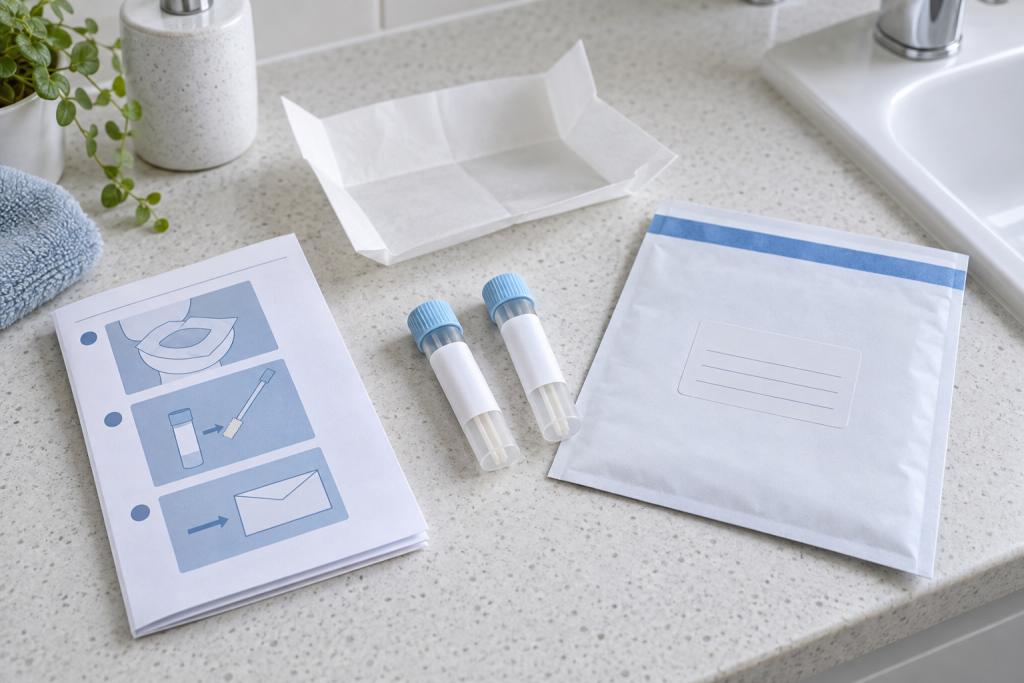
A faecal occult blood test (FOBT), also called an immunochemical FOBT or FIT, is a simple home test that looks for tiny amounts of blood in a bowel motion that cannot usually be seen. It is widely used to screen for bowel cancer before symptoms develop.
What does an FOBT detect?
Small polyps and bowel cancers can bleed intermittently. An FOBT detects human blood in a stool sample, but it cannot identify where the blood came from or explain why it is present.
Blood may be caused by bowel polyps, haemorrhoids, inflammation or other non-cancerous conditions. However, an abnormal result must not be ignored because bowel cancer is also a possible cause.
Who should complete bowel cancer screening?
Under Australia’s National Bowel Cancer Screening Program, eligible people aged 50–74 are offered a free home screening kit every two years. People aged 45–49 can also request their first free kit.
This routine screening applies to people at average risk who do not have bowel symptoms. Patients with a strong family history, a previous advanced polyp, inflammatory bowel disease or another increased-risk condition may need a different surveillance plan.
How is the test performed?
The kit contains collection tubes and instructions. Small samples are collected from bowel motions and returned to the laboratory in the supplied packaging. Follow the instructions carefully and return the samples promptly.
The test does not require dietary restriction and is completed privately at home. Do not collect a sample during active menstrual bleeding, and seek advice if you have obvious rectal bleeding.
What does a positive FOBT mean?
A positive result means blood was detected. It does not mean that you definitely have bowel cancer. Most positive results are caused by conditions other than cancer, but further investigation is required.
You should arrange a timely medical review. In most cases, colonoscopy is recommended to examine the lining of the large bowel and remove any polyps found. Repeating the FOBT instead of investigating a positive result is generally not appropriate.
What does a negative result mean?
A negative result means blood was not detected in the samples. It reduces the likelihood of bowel cancer but does not exclude it completely, because polyps and cancers may not bleed all the time.
Continue screening at the recommended interval. Do not wait for the next screening test if bowel symptoms develop.
When should you see a doctor regardless of the result?
Seek medical assessment if you experience:
- visible blood in the bowel motion
- a persistent change in bowel habit
- unexplained iron deficiency or anaemia
- unexplained weight loss
- persistent abdominal pain or bloating
- a strong family history of bowel cancer or advanced polyps.
FOBT is a screening test, not a substitute for clinical assessment or colonoscopy when symptoms or increased risk are present.
The key message
Bowel cancer screening saves lives by identifying bleeding from polyps or early cancers before symptoms appear. Complete the kit when it is due, follow up every positive result, and discuss persistent bowel symptoms or your individual risk with your doctor.
This information is general and does not replace personalised medical advice.